Today we are studying Egyptian religion.
This is the presentation. You can find more information about Egyptian religion at page 150 of your book. On page 153 there is a drawing with the structure of an Egyptian temple.
Now complete this form to demonstrate that you have read and understood this lesson.
Do exercise 1 of page 150. Complete the table with three gods that appear in the book and another god or goddess that is not in the book. Find also where there was a temple in Egypt for each one of the four gods.
Monday, 18 May 2020

Tuesday, 12 May 2020
Unit 8/9. Lesson 3. The history of Egypt
"Homework" for Thursday:
Before doing these tasks, read page 142 of the book and watch this presentation. There is no form to complete today.
- Do exercises 1, 3 and 4 of page 142.
- Answer this question: Why is it a bad idea to call Egypt an empire instead of a kingdom?
Before doing these tasks, read page 142 of the book and watch this presentation. There is no form to complete today.
Thursday, 7 May 2020
Unit 8/9. Lesson 2. The invention of writing
As you have studied in the previous unit, the difference between prehistory and history proper is writing. Mesopotamians invented the first writing system. The other river civilisations (Egypt, India, China) also invented their own writing systems: of all these, Chinese script is the only writing system that is still in use.
In the presentation you can see how Mesopotamians and Egyptians invented writing, the basic characteristics of their writing systems and what they used them for. In your book, there is some information about cuneiform writing at page 134 (section 5.1) and hieroglyphic script at page 152 (section 6.1)
It is important that you understand that not all the civilisations in the word discovered writing at the same time. The peoples that had writing systems are considered historical civilisations, those peoples that could not write are prehistorical, even if they lived at the same time.
This video shows you the origins of writing systems in the world.
In this animated map you can see how writing systems expanded throughout Europe from 2000 BC until AD 2019 (you don't need to watch the whole video, just click at different moments to see how the map changes).
Answer this form to see if you have understood the lesson. There are only 3 questions today.
In this website you can use a simplified form of hieroglyphic script to write your name. Send a picture of your name to the teacher if you like it! This is how the teacher's name looks like:

Monday, 4 May 2020
Unit 8/9 - Lesson 1. Introduction. The river civilisations
The questions that we are going to ask ourselves are:
– Why did the first historical civilisations appear in the valleys of great rivers?
– What distinctive features do those historical civilisations share?
We are going to focus on the two of those civilisations that had most influence on the modern European civilisation: Mesopotamia and Egypt. Both of them emerged at the ends of the Fertile Crescent area, which you know well from the previous lesson. In the next lessons we shall focus on the history of Egypt, which is simpler than the history of the Mesopotamian kingdoms and empires.
This is the presentation on the contents of this lesson. In some slides there is a reference to the pages of your book where you can read extra information.
Some important vocabulary for this lesson:
- To dig: to make a hole in the ground: to dig a canal.
- Irrigation: watering plants with an artificial method, usually for agriculture. You can bring water into the plants from a river by a canal, or using a pump, or dig a well to get the water.
- Flood: a period of high water level in a river, when the water goes out of the normal river bed.
- Slime: the wet mud that you can find in a river. After a flood, the flooded areas are covered with slime.
- To sow: to plant seeds.
- Ruler (person): the person who leads the government of a country. The pharaoh was the ruler of Ancient Egypt.
- Public works
- To settle a dispute
- Stratum (plural strata): a layer, a level in a vertical succession. Archaeologists dig in their excavations looking for the strata in the subsoil which contain remains from the past
 |
| Many Mesopotamian cities were destroyed and people forgot about them: in their place you could only see something that looked like a natural hill or mountain, which local people called tell. These hills were formed by the accumulation of archaeological strata from different periods. Excavation reveal the ruins that date from the successive historical moments. In the image: excavation at Tell-Hazna (Syria) |
This is also time to remember the geography of the Fertile crescent area, which you have studied this year. You will need it for the test.
Once you have read the contents of the lesson, fill in the form below to prove you have read and understood this.
You should receive an e-mail asking you for some exercises.
Once you have read the contents of the lesson, fill in the form below to prove you have read and understood this.
You should receive an e-mail asking you for some exercises.
Tuesday, 21 April 2020
Unit 7 - Lesson 8. The Neolithic and the Metal Ages in Spain. Megalithic monuments
This is the last "lesson" of unit 7. I'm not posting a new one on Thursday: it's Castile and León Day
Next week we will do an activity or a test to see if you have understood the whole unit of Prehistory.
__________
(You can see the information about this in your book. Pages 116-119)
The Neolithic period in the Iberian Peninsula
Agriculture and livestock farming started in the Iberian Peninsula later than in the Fertile Crescent, around 5000 BC.
Cardium pottery ("cerámica cardial") is the most characteristic form of art of this this period. This name comes from Cardium edule, a species of cockle (a mollusc that we call berberecho in Spanish). The shells of Cardium were used for decorating pottery:
The Copper Age and megalithic monuments (c. 2500-2000 BC)
There were a lot of copper and tin deposits in the Iberian Peninsula. People from the East came searching for metals.
A characteristic form of pottery came with trade: the bell beaker ("vaso campaniforme"), a type of vase that existed in all Western Europe at the end of the Copper Age


The Bronze Age in the Iberian Peninsula (c. 2000-1000 BC)


Next week we will do an activity or a test to see if you have understood the whole unit of Prehistory.
__________
(You can see the information about this in your book. Pages 116-119)
The Neolithic period in the Iberian Peninsula
Agriculture and livestock farming started in the Iberian Peninsula later than in the Fertile Crescent, around 5000 BC.
Cardium pottery ("cerámica cardial") is the most characteristic form of art of this this period. This name comes from Cardium edule, a species of cockle (a mollusc that we call berberecho in Spanish). The shells of Cardium were used for decorating pottery:
 |
| Cardium edule shell |
 |
| The decoration of Cardium pottery was made with the edge of Cardium shells and with other sharp objects |
The Copper Age and megalithic monuments (c. 2500-2000 BC)
There were a lot of copper and tin deposits in the Iberian Peninsula. People from the East came searching for metals.
A characteristic form of pottery came with trade: the bell beaker ("vaso campaniforme"), a type of vase that existed in all Western Europe at the end of the Copper Age
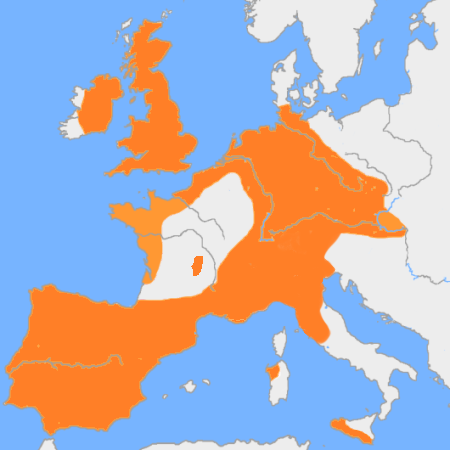 |
| Areas of Europe with bell beakers |
 |
| A bell beaker: a recipient with the shape of a bell |
The same people that made bell beakers made spectacular constructions called megalithic monuments or monuments made of gigantic stones. These monuments had a religious or magical meaning.
The most simple megalithic construction is just a large vertical stone: a menhir
A stone row ("alineamiento") is a series of menhirs forming a line.
 |
| Stone rows of Carnac, France |
A cromlech is a megalithic construction in circle. The most famous cromlech is Stonehenge, in England. The monument is oriented to the Sun on summer solstice: the monument has a religious meaning.
A dolmen is a megalithic construction made of vertical stones, situated as walls, and a large horizontal stone, in the shape of a roof. Originally, these constructions were covered with earth. They were tombs, for burying people.
 |
| This is how a dolmen originally looked like |
When the dolmen has an entrance covered with stones, it is called a corridor tomb.
 |
| A corridor tomb from inside |
There are a lot of megalithic constructions in the European Atlantic coast, from the west of the Iberian Peninsula to the Baltic Sea and from Southern Italy to the British Isles.
In the South-East of the Iberian Peninsula (Málaga, Almería), the culture of Los Millares produced dolmens and corridor tombs, called "cuevas" by local people: the most famous one is the Menga cave ("Cueva de Menga") (see page 119 of your book).
The Bronze Age in the Iberian Peninsula (c. 2000-1000 BC)
 |
| Bronze Age cultures in the Iberian Peninsula. Tin mines are very important for bronze. |
The most important remains from the Bronze Age in the Iberian Peninsula are the culture of El Argar, in South-East Spain, and the Talaiotic culture in Majorca and Minorca.
The Talaiotic culture is characterised by three types of characteristic stone buildings:
Taula (the name in Catalan means table, we do not know the purpose of this type of megalithic construction).
Talaiot (the Catalan name is related to the Spanish word "atalaya"): a defensive watchtower (a tower for watching the enemies).
Naveta (the name means that it has the shape of a ship, "nave", upside down): a collective tomb for burying a lot of people.
 |
| Naveta des Tudons (Minorca) |
 |
| Opposite view of the Naveta des Tudons |
In the centre of the Iberian Peninsula, the culture of Cogotas I was the most important in the Bronze Age. The most important towns with walls ("castros") of this culture are located in the province of Ávila: Las Cogotas, Ulaca, La Mesa de Miranda.
 |
| Cogotas I pottery (Museo Arqueológico Nacional, Madrid) |
The most visible parts of Las Cogotas archaeological site today are from the Iron Age, though.
The Iron Age in the Iberian Peninsula (1st millennium BC)
Colonisers from the Eastern Mediterranean introduced iron in the Iberian Peninsula. They also introduced writing, so history starts with them: Phoenicians, Greeks and Carthaginians.
Tartessos was the most developed culture from the Iberian Peninsula, in the region of the Guadalquivir mouth.
Phoenicians and Greeks wrote legends about Tartessos. Some authors think that the name "Tarshish" in the Bible also means Tartessos.
| Tesoro del Carambolo, from the Tartessian civilisation (we do not know if the jewels were made by Tartessians or by Phoenicians) |
In the interior region, Iberian and Celtic peoples made defensive castros.
 |
| Defensive methods (Las Cogotas): walls and sharp stones on the ground in front |
 |
| "Verraco" from Las Cogotas in Ávila. This is the most typical element of the Iron Age Celtiberian cultures |
Monday, 20 April 2020
Unit 7 - Lesson 7. The Metal Ages
Today's lesson corresponds to pages 114-115 of your book.
Have a look at this presentation:
Today, I'm giving you a glossary with the Spanish translation of some basic words from this lesson:
Copper - cobre
Tin - estaño
Bronze - bronce
Iron - hierro
Ore (copper ore, etc.) - mineral (metálico: mineral de cobre, etc.)
Smith - herrero
Forge - forja (o fragua)
Foundry - fundición
Cast - molde (para metal fundido)
Cart - carro
Potter's wheel - torno de alfarero
Plough (in American English, the spelling is plow) - arado
Sail - vela
In this video English kids explain you how an axe was made in the Bronze Age:
Please answer the questions of this form.
Tuesday, 14 April 2020
Unit 7 - Lesson 6. The Neolithic period
Update: the form is ready. Please scroll down to the end of this post and fill in the form. It gives your "marks" automatically at the end.
First of all, answer this question in your mind:
What is the most important difference between the Palaeolithic and the Neolithic?
Why do we talk about the "Neolithic Revolution"?
–Later you are going to see if your mental answer is right or not.
Today we are going to start by reviewing some English vocabulary. Please make sure you know these words before studying the lesson.

Millet (mijo) is not so common in modern diet.
This is the presentation about the Neolithic period. It corresponds to pages 112-113 of your book.
First of all, answer this question in your mind:
What is the most important difference between the Palaeolithic and the Neolithic?
Why do we talk about the "Neolithic Revolution"?
–Later you are going to see if your mental answer is right or not.
Today we are going to start by reviewing some English vocabulary. Please make sure you know these words before studying the lesson.
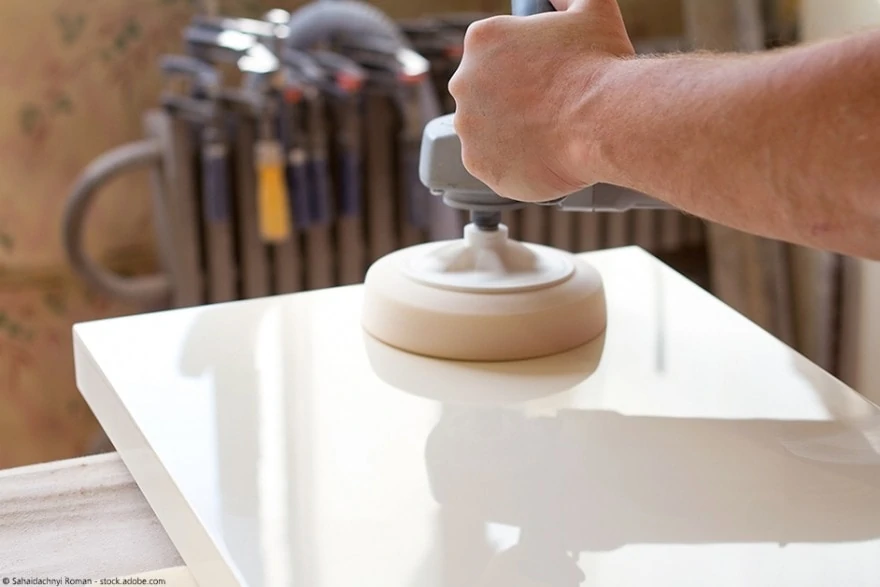 |
| This man is polishing a piece of marble |
 |
| This towel is made of fabric... |
 |
| ...And this is not "a fabric"! It is a factory where machines weave fabric. (Weave = tejer) |
 |
| This is a craftsman, or an artisan: a person who makes things with his hands. |
 |
| This is a sickle: a tool for cutting grass or harvesting cereal |
 |
| This is an axe |
 |
| This is a hoe (Spanish: azada) |
 |
| This is a wind mill for grinding cereal (and producing flour) |
Wheat is the most common cereal (in the Western world): most bread is made of wheat flour.
In East Asia and in other parts of the world, the most common cereal is rice. Maize (or corn) is a cereal that comes from America.
You can also make bread out of rye (centeno) flour, but this kind of bread is dark.
Barley (cebada) is mainly used for feeding animals, and also to produce beer.
Oats (avena) is the favourite food for horses.
 |
| Rye bread |
A farmer is a person who works in a farm. There are two types of farming:
- Agriculture: raising crops (plants for eating: cereals, vegetables...)
- Livestock farming: raising domestic animals, or farm animals: hens, rabbits, pigs, cattle (cows, bulls, etc. Livestock are all the farm animals in general. Cows and all the livestock of the same species are called cattle.
Some domestic animals:
 |
| Ram (adult male) and sheep (female). Their baby is called a lamb. Sheep is the same word for the singular and plural. A group of animals is called a herd. If it is a group of sheep you can also call it a flock. A herdsman is a man who takes care of a herd. When he works with sheep he is called a shepherd (pronounced 'sheperd', with a p sound). |
 |
| A goat. |
 |
| Cattle: a bull (adult male), a cow (adult female) and a calf. A castrated bull is an ox (plural: oxen) |
This is the presentation about the Neolithic period. It corresponds to pages 112-113 of your book.
In this video you can see a woman weaving on a Neolithic loom:
Subscribe to:
Posts (Atom)